

Building India’s Future with Smarter Construction Equipment
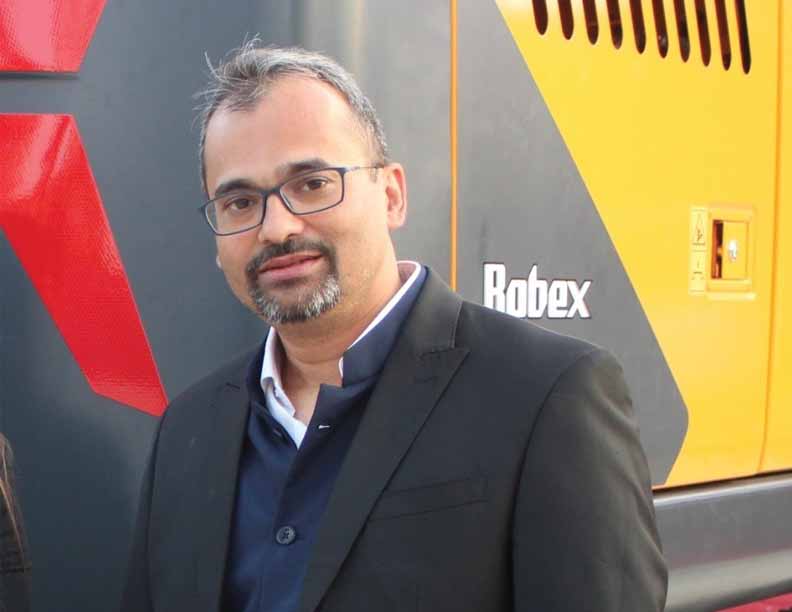
India’s infrastructure expansion is transforming the construction equipment industry, with technology, automation, and efficiency becoming key priorities. As project demands grow, manufacturers are introducing smarter, more reliable machines that enhance productivity, improve safety, and deliver long-term value across diverse infrastructure segments. – Raja Sharma- Head of Product Marketing, HD Construction Equipment India
How is India’s infrastructure push influencing demand for advanced construction equipment?
As India invests heavily in infrastructure, executing large-scale projects under tight timelines is driving a major shift from upfront equipment costs to Total Cost of Ownership (TCO). Relying on low-cost or legacy machinery leads to frequent breakdowns, delays, and higher maintenance fees that prove far more expensive in the long run. Consequently, buyers are prioritizing long-term expenses like fuel efficiency, uptime, and residual value.
To remain competitive, today’s jobsites require advanced assets that lower fuel consumption, minimize unexpected downtime, and integrate with telematics for real-time monitoring and predictive maintenance. These capabilities turn advanced machinery from a premium option into a strict project necessity. India’s infrastructure boom is ultimately compelling contractors to invest in technologically advanced, reliable equipment because the long-term operational savings and productivity gains vastly outweigh the higher initial purchase price.
What are the key trends shaping the construction equipment industry today?
The sector is being redefined by a convergence of digital intelligence and human-centric design. We are moving past basic tracking toward real-time telemetry systems that actively diagnose engine health and map fuel burn metrics. Simultaneously, because sophisticated assets require skilled minds, operator ergonomics and intuitive controls have climbed to the top of purchasing criteria. The manufacturers winning the market today are those backing their steel with predictive maintenance packages, superior field support, and clear pathways toward lower carbon footprints.
How is technology enhancing productivity, safety, and efficiency on project sites?
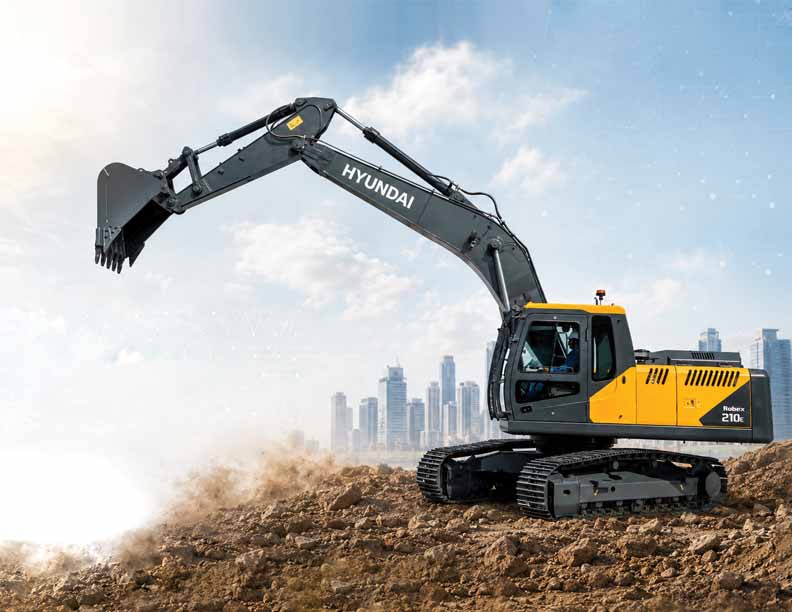
Jobsites are rapidly evolving from fragmented work zones into tightly synchronized, data-driven ecosystems. Onboard technological suites, ranging from high-precision hydraulic control valves to IoT-linked sensors, take the guesswork out of daily operations. By introducing automated grade control and Remote machine diagnostics, projects are reducing costly rework, improving accuracy, and significantly lowering on-site safety risks. This connective tissue ensures fleet managers maximize asset utilization while driving down operational leakages.
What role is automation playing in the next generation of construction machinery?
Automation is stepping in to establish a high baseline of operational consistency, shielding project timelines from human variance and operator exhaustion. Today’s intelligent systems autonomously modulate power output based on real-time soil or rock resistance. As we look downstream, the integration of AI-guided path planning and semi-autonomous material handling will reshape site logistics. This evolution isn’t about removing human oversight; it’s about elevating or empowering the operator into a high-level site supervisor backed by a self-optimizing machine.
Which infrastructure segments are creating the strongest growth opportunities for the industry?
The primary demand engines are concentrated in high-capacity transport arteries and critical extraction sectors. High-speed expressways, multi-modal logistics nodes, complex metro tunnels, and major airport expansions are generating a continuous need for heavy-duty machinery. Additionally, the mining and quarrying sectors require high-tonnage, structurally reinforced machinery capable of maintaining aggressive production cadences under brutal, round-the-clock operating pressures.
How important is operator training in maximizing equipment performance and safety?
An advanced machine is only as effective as the individual in the cabin; sophisticated technology requires a matching evolution in human skill. Structured operator development directly influences a project’s bottom line by maximizing fuel efficiency, reducing premature component wear, and maintaining incident-free work environments. As cockpits transition to include digital displays, advanced telematics feeds, and automated controls, continuous hands-on training and simulator-based learning are vital
to unlocking the full return on equity of these high-tech assets.
What innovations do you believe will redefine construction equipment over the next decade?
The coming decade will belong to machine-to-machine (M2M) communication, edge computing, and alternative energy ecosystems. We will witness the mainstreaming of predictive analytics platforms that can accurately forecast a component failure before it occurs, near-zero emission hydrogen and electric powertrains, and autonomous site fleets that coordinate tasks dynamically via localized networks. On the manufacturing front, the transition to AI-inspected smart factories will guarantee a level of build reliability and structural integrity that was previously impossible.
What is HD Hyundai’s vision for supporting India’s infrastructure and industrial growth? HD Construction Equipment is positioned as an embedded technological and lifecycle ally for India’s industrial ambitions, transcending the role of a traditional manufacturer. Our objective is to deliver a holistic operational ecosystem that fuses intelligent heavy machinery with robust telematics networks, proactive field services, comprehensive operator academies, and an extensive local parts footprint. By deeply anchoring our engineering, localized manufacturing, and support infrastructure within the Indian market, we aim to give contractors the velocity and structural precision required to build the nation’s future efficiently.