

Precision Roll Forming and the Future of Indian Manufacturing
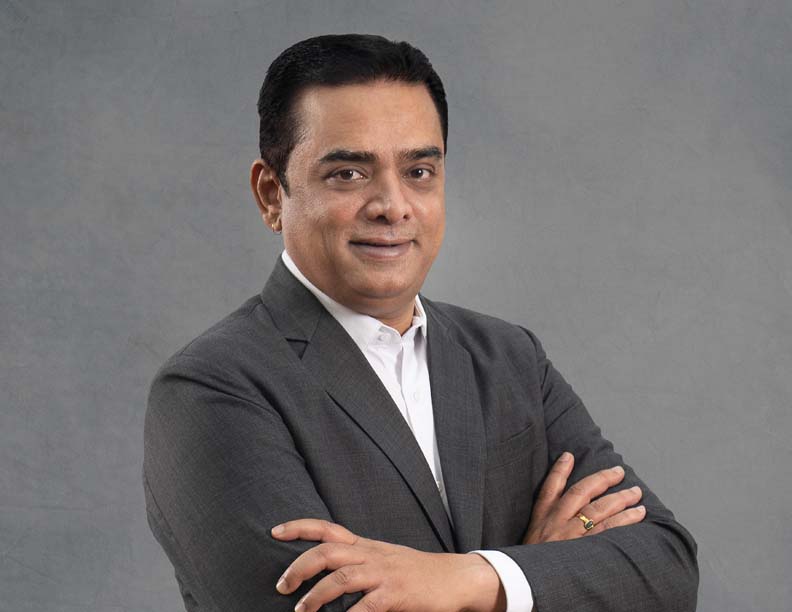
As India advances toward becoming a global manufacturing powerhouse, precision engineering, automation, and innovation are reshaping industrial capabilities. From cold roll forming and Industry 4.0 adoption to supply chain localization and OEM collaboration, manufacturers are focusing on quality, efficiency, and engineering excellence to drive sustainable growth and global competitiveness. – Santosh Venkatasubbaiah, Director, Marketing & Sales, Mother India Forming Pvt. Ltd.
How is precision roll forming supporting the growth of India’s manufacturing sector?
Precision used to be a quality checkbox, something inspected for at the end of the line. That’s changed. In a roll-formed part, dimensional consistency decides how cleanly it drops into an assembly, how much secondary work it needs, and how predictable everything downstream is. Precision has quietly become a productivity question, not just a quality one. That matters for where India is heading. We’re no longer competing only on cost; we’re being asked for more complex profiles, tighter tolerances, higher volumes, and parts that behave identically the hundred-thousandth time as the first. Cold Roll forming is one of the few processes that delivers complex geometry and repeatability together, at scale. If India wants to be taken seriously as a manufacturing destination rather than a cheap workshop, capabilities like this are part of how we get there.
What demands are OEMs placing on component manufacturers today?
OEMs have largely stopped shopping for suppliers; they’re looking for partners, and the distinction is real. A supplier takes a drawing and makes the part. A partner gets involved before the drawing is finished: flagging a feature that’s expensive to form, suggesting a change that simplifies assembly, prototyping fast, taking risk out of the program rather than just executing it. Early involvement is now the clearest line between vendors who win long-term work and those who re-compete on price every quarter. There’s also a strong pull toward consolidation, fewer suppliers per assembly, more processes under one roof. And cost, quality and delivery still must hold together. What’s changed is that meeting them is the price of entry now, not the differentiator.
How is automation improving quality, speed, and efficiency in metal forming operations?
In precision forming, labour is the least interesting part of the automation story. The real value is consistency, removing the small human variations in setup and changeover that, multiplied across thousands of parts, separate a stable process from a steady stream of rework. It also gives you traceability, which OEMs increasingly treat as non-negotiable: tie every part back to its process parameters and you catch drift before it becomes a defect.
What role does innovation play in developing customized steel and tubular solutions?
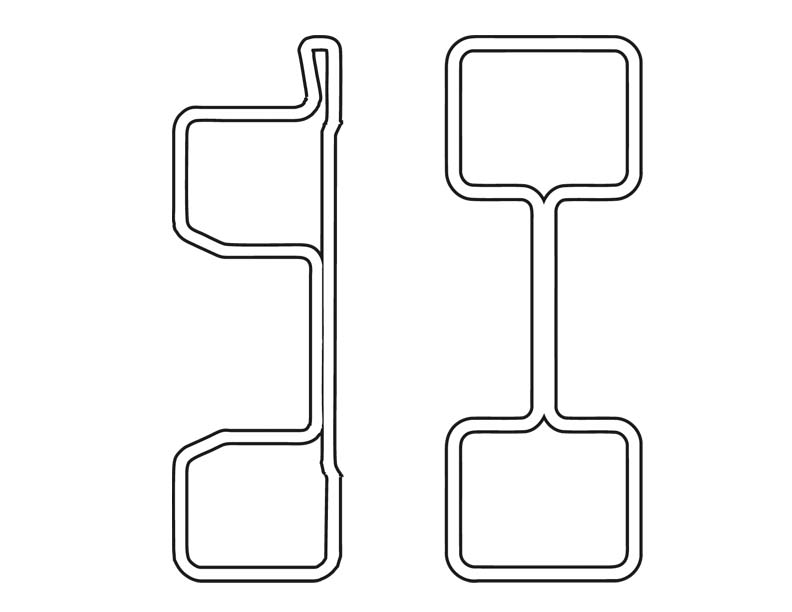
Most people picture innovation on the shop floor. In our experience it happens earlier, at the design table, before any metal is cut. When a customer wants a part that’s lighter, stronger or simpler to assemble, the answer usually isn’t in how we make it but in rethinking the geometry, the material, or how it fits the larger structure. Simulation lets us test those ideas before committing to tooling, where the real cost and risk sit. That’s what makes this work interesting. Cold Roll forming now reaches geometries that were uneconomical a decade ago. The constraint is rarely whether something ‘can’ be formed, it’s whether someone will engineer it properly upfront.
How important is localization in strengthening global supply chains from India?
Localization has moved from a cost conversation to a resilience one, which is a more durable reason for it to stick. Recent disruptions taught global manufacturers that a supply chain built purely for lowest cost is fragile, and fragility has its own price. India is well placed here because it offers engineering depth alongside capacity: shorter chains, faster response, diversified risk. Localization only works if the local supplier genuinely meets global standards, same tolerances, same delivery discipline, same documentation. Capacity is easy to build; capability is not. The manufacturers who benefit most will be the ones who built that capability before the demand arrived.
What challenges do manufacturers face while balancing cost, quality, and delivery timelines?
The framing of “balance” is part of the problem. Treat cost, quality and delivery as three dials you trade against each other, and you’ll spend your life firefighting. The manufacturers who handle it well treat them as outcomes of the same thing: a well-engineered, well-run process. Get the process stable, repeatable and properly tooled, and quality stops being something you inspect for, delivery becomes predictable, and cost falls out of the reduced waste. The pressures are real, material prices, demand swings, skilled labour. But chasing cost in isolation is usually what breaks the other two. The durable answer is operational discipline.
How is Industry 4.0 transforming modern engineering and fabrication facilities?
Stripped of the buzzwords, Industry 4.0 is the shift from reacting to problems to anticipating them. Connected machines and real-time monitoring let you catch a drifting process, a wearing tool or a forming bottleneck while you can still act, not in the post-mortem after a batch has gone wrong. The practical wins are unglamorous and genuine: less downtime, clearer visibility into where time and material go, maintenance you can plan. What I’d push back on is treating the technology as the transformation. The data is only as good as the team’s ability to act on it, plenty of facilities are drowning in dashboards nobody uses. The real shift is cultural as much as technical, and that’s where the value lives.
Which sectors are driving the highest demand for roll-formed and precision-engineered components?
Demand clusters around industries needing parts that are lightweight, strong and dimensionally precise at once, construction and material-handling equipment, infrastructure, elevators, transportation, storage and racking, renewable energy, industrial machinery. More telling is ‘why’ they’re pulling: most are mid-transformation — electrification, automation, sustainability, lighter structures and each trend translate almost directly into a forming requirement. So, the demand isn’t really for cold roll-formed parts. It’s for the structural efficiency good cold roll forming makes possible, which is why the applications keep getting more sophisticated, not more commoditised.
What is your vision for the future of advanced manufacturing and cold metal forming in India?
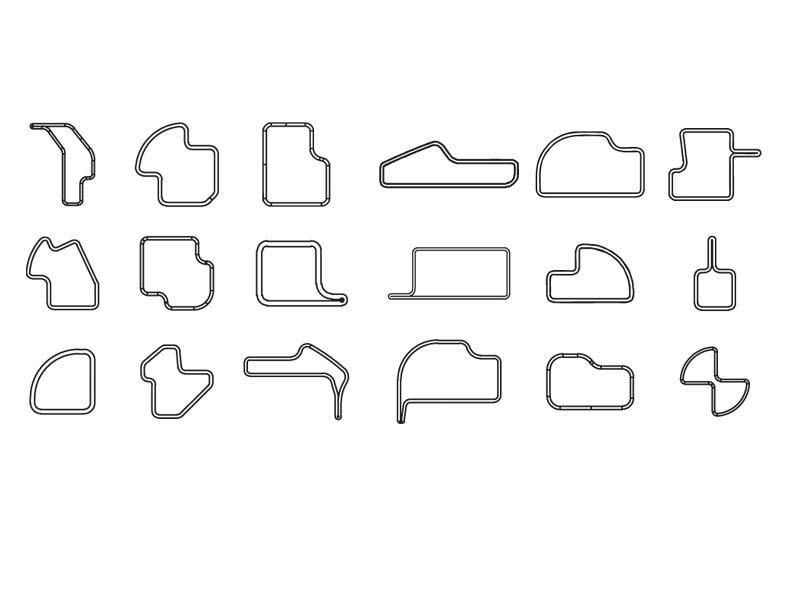
India has to decide what kind of manufacturing nation it wants to be. The easy path is staying the affordable option: competent, cheap, and ultimately replaceable by the next low-cost region. The harder, far more valuable path is becoming known for engineering-led manufacturing: the place you go not because it’s cheapest, but because the work gets done right. Cold Roll Metal Forming has a real part to play, because it sits exactly where engineering meets production. My hope for the next phase is less about technology and more about ambition. The tools are increasingly available to everyone. What will separate the leaders from the suppliers is whether they’re willing to engineer rather than just fabricate, and to own outcomes rather than just parts. That mindset, more than any machine, will decide how far Indian manufacturing goes.