

Construction Equipment industry propagates Technology, Localisation and Sustainable Growth
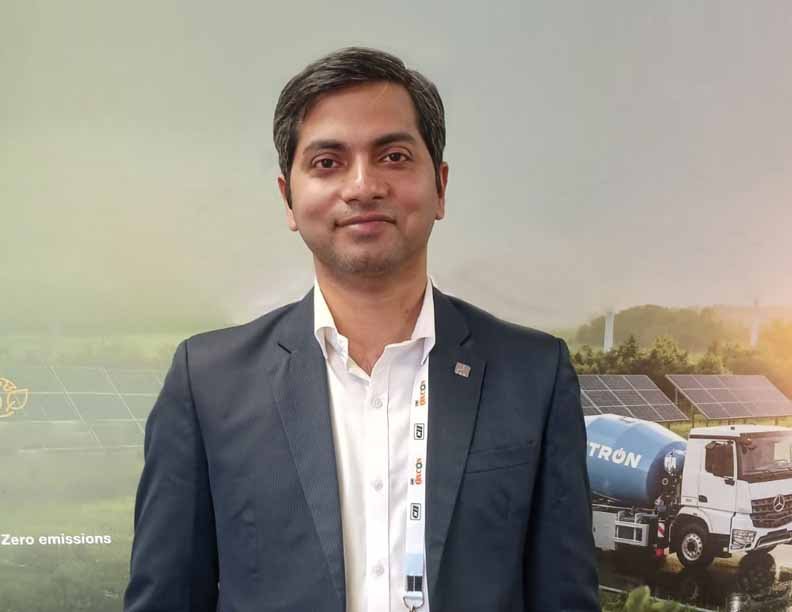
As India accelerates its infrastructure development, the construction equipment industry is evolving through localisation, advanced technologies and sustainable practices. In this conversation, Debjeet Chatterjee, General Manager – Strategy & Business Development, Putzmeister Concrete Machines Pvt. Ltd., shares insights on industry trends, innovation and the future of construction.
How is the Make in India initiative influencing the construction equipment industry?
The Make in India initiative has fundamentally transformed the construction equipment industry by encouraging greater domestic manufacturing, technology localisation, and supply chain development. As India’s infrastructure ambitions continue to grow, the demand for construction equipment is increasingly being met through locally manufactured solutions rather than imports. Today, most global construction equipment manufacturers have significantly expanded their manufacturing footprint in India, recognizing the country’s strategic importance not only as a large domestic market but also as a global manufacturing hub. This localization shas enabled faster product development, improved cost competitiveness, shorter delivery cycles, and solutions that are better suited to Indian operating conditions. At Putzmeister, we firmly believe in this vision. Our continued investments in India, including our upcoming manufacturing facility, reflect our long-term commitment to the country’s growth story. Beyond manufacturing, our focus is on bringing global engineering excellence closer to Indian customers by developing solutions that combine international technology with local application expertise. We see Make in India not just as a policy initiative, but as a catalyst for innovation, self-reliance, and sustainable industrial growth.
What key trends are shaping the future of concrete construction in India?
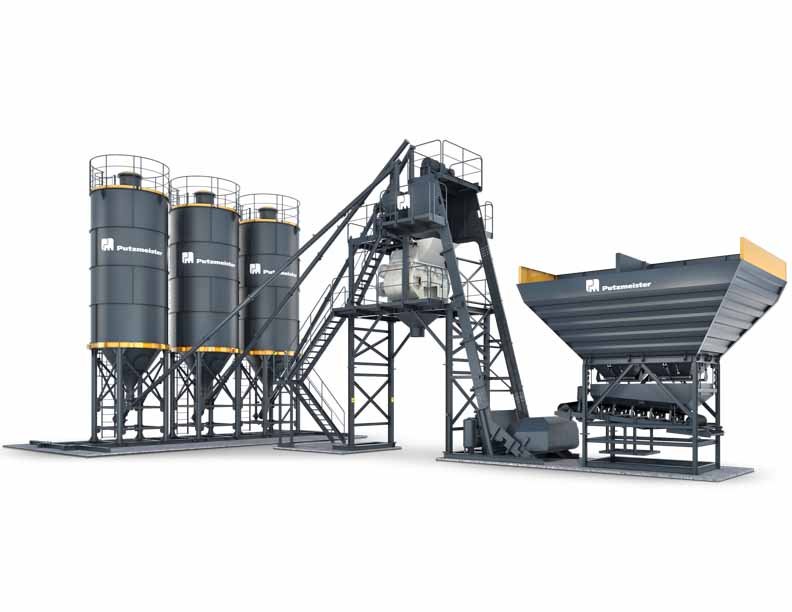
India’s construction industry is entering a new phase where the emphasis is shifting from conventional construction to precision-engineered, technology-enabled concrete solutions. One of the biggest trends is the growing demand for high-performance and higher-grade concrete, driven by increasingly complex infrastructure such as metros, high-speed rail, long-span bridges, airports, industrial corridors, and high-rise developments. These projects require specialised concrete with stringent performance characteristics, including self-compacting concrete, temperature-controlled concrete, waterproof concrete, and other advanced mix designs. At the same time, customers are demanding greater consistency, minimal material wastage, and higher productivity. This is accelerating the adoption of intelligent batching systems, automated process controls, and digitally monitored operations that ensure precise dosing and repeatable concrete quality. Another significant trend is sustainability. The industry is increasingly looking for solutions that reduce energy consumption, optimise material utilisation, and lower the overall carbon footprint without compromising construction quality. Together, these trends are redefining the future of concrete construction in India.
How is advanced concrete pumping technology improving project efficiency?
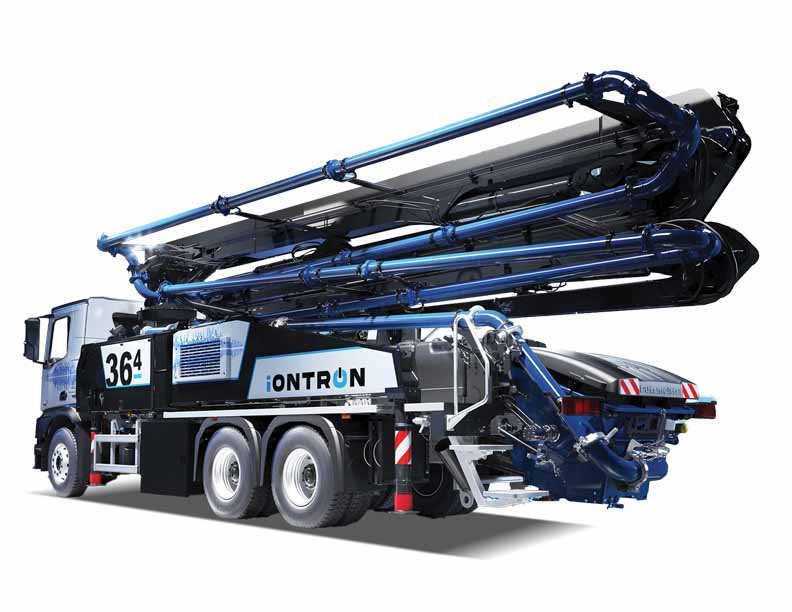
Modern infrastructure projects demand not only faster execution but also greater precision and reliability. As concrete specifications become more sophisticated, pumping technology has evolved significantly to meet these new challenges. Advanced pumping systems today are capable of handling high-strength and specialised concrete while maintaining smooth, uninterrupted flow over greater distances and heights. This enables contractors to execute complex structures with greater consistency and reduced project delays. The increasing adoption of mechanised concrete placement has also helped address industry-wide labour shortages while improving safety and operational efficiency. In parallel, intelligent pumping controls, higher-pressure systems, and advanced placing solutions have enhanced productivity, minimised downtime, and improved concrete placement accuracy. Ultimately, advanced pumping technology is enabling contractors to complete projects faster, achieve superior construction quality, and optimise overall project economics.
What challenges do contractors face in adopting modern construction technologies?
The transition to modern construction technologies presents tremendous opportunities, but it also comes with its own set of challenges. Contractors today must balance productivity improvements with investment decisions, workforce readiness, and evolving project requirements.
One of the key barriers is the industry’s readiness to adopt new technologies. Advanced equipment requires trained operators, service preparedness, and confidence in long-term operational reliability. This makes capability development just as important as product innovation. At Putzmeister, we address these challenges by introducing technologies that deliver measurable value while remaining practical for Indian job-site conditions. Our latest generation of intelligent concrete solutions combines automation, AI-enabled process optimisation, and sustainable power technologies to improve productivity, minimise material wastage, and enhance operational efficiency. Equally important is our investment in customer support, operator training, and lifecycle services, ensuring that customers can fully realise the benefits of these technologies from day one. We believe successful innovation is not only about introducing new machines—it is about enabling customers to adopt them with confidence.
What is your vision for the future of India’s construction and infrastructure industry?
India is at the beginning of what could be one of the most significant infrastructure transformations in its history. With sustained government investment, progressive policy initiatives such as Make in India and Viksit Bharat, and a strong manufacturing ecosystem, the country is well positioned to become a global leader in infrastructure development.
We are already witnessing a remarkable shift—from being primarily a service-driven economy to becoming an increasingly important manufacturing and engineering hub. This evolution is creating unprecedented opportunities across construction equipment, cement, concrete technology, and industrial infrastructure. Over the next decade, I believe India’s construction industry will become more intelligent, more sustainable, and far more technology-driven. Digitalisation, automation, connected equipment, alternative energy solutions, and AI-enabled construction processes will become mainstream rather than differentiators.
At Putzmeister, we are proud to contribute to this journey by delivering solutions that embody Sustainability, Intelligence, and Next-Generation Performance. Our vision is to empower customers with technologies that enable faster, safer, and more sustainable construction while supporting India’s aspiration to become one of the world’s leading infrastructure economies. I firmly believe that the coming decades belong to India. As our infrastructure ambitions continue to grow, so too will our responsibility to build smarter, greener, and with uncompromising quality. That is the future we are committed to shaping.