

Engineering the Next Generation of Structural Components
As OEM expectations shift towards integrated manufacturing, design collaboration and dependable execution, Mother India Forming continues to strengthen its position through engineering expertise, advanced roll forming capabilities and quality-driven manufacturing, supporting customers with precision components and value-added structural solutions across demanding applications.
Mother India Forming has built its reputation in precision cold roll forming and engineered structural components. How have OEM expectations evolved in recent years, and how has the company responded?
The biggest change is where the conversation starts. A decade ago an OEM sent a drawing and asked for a price. Today the better ones come to us before the drawing is frozen, because they have learned that most of a component’s cost and risk are decided at the design table, not on the shop floor.
Two other expectations have hardened: consolidation, meaning fewer suppliers per assembly and one party accountable for the finished part, and evidence, meaning tolerances and traceability are examined before an order is placed rather than audited afterwards. We have built around both, integrating slitting through to powder coating in a single facility, with in-house R&D and tooling so we can engage from the concept stage. Cost, quality and delivery are still the test. What has changed is that meeting them is the entry price, not the differentiator.
Exhibitions remain an important platform for business engagement, yet MIF has chosen not to exhibit this year. What shaped that decision, and how are you connecting with customers and OEM partners through other channels?
It was an allocation decision rather than a retreat. We have exhibited before and we will again. But a component programme is rarely won on an exhibition floor. It is won in a design review, a feasibility study, a first-article inspection. Those conversations need senior engineering time, and that is the resource an exhibition consumes most heavily.
So this year that time has gone directly to customers: plant visits where OEM engineering and quality teams see the forming lines and the inspection process rather than take our word for it, joint design sessions on live programmes, and a sustained presence in the technical press so that specifiers find us when they are actually looking.
As construction equipment manufacturers continue to localise production, what opportunities do you see for component suppliers in supporting the next phase of India’s manufacturing growth?
The opportunity is real, but narrower than it looks. Localisation has moved from a cost argument to a resilience argument, which is a far more durable reason for it to stick. But the door is open only to suppliers arriving with capability, not merely capacity. Anyone can install a line. Far fewer can hold tolerance across a hundred thousand parts, develop their own tooling and produce the documentation a global quality system demands.
Over the past ten years we have localised close to 90% of the imported structural profiles on selected OEM programmes. Very little of that was won on price. It was won by proving an Indian-made part could go straight into a global platform without a concession or a deviation.
What investments has Mother India Forming made in manufacturing technology and quality systems to stay ahead of customer expectations?
Our investment follows one principle: put the money where the variation lives, which in forming means changeover, tooling and measurement.
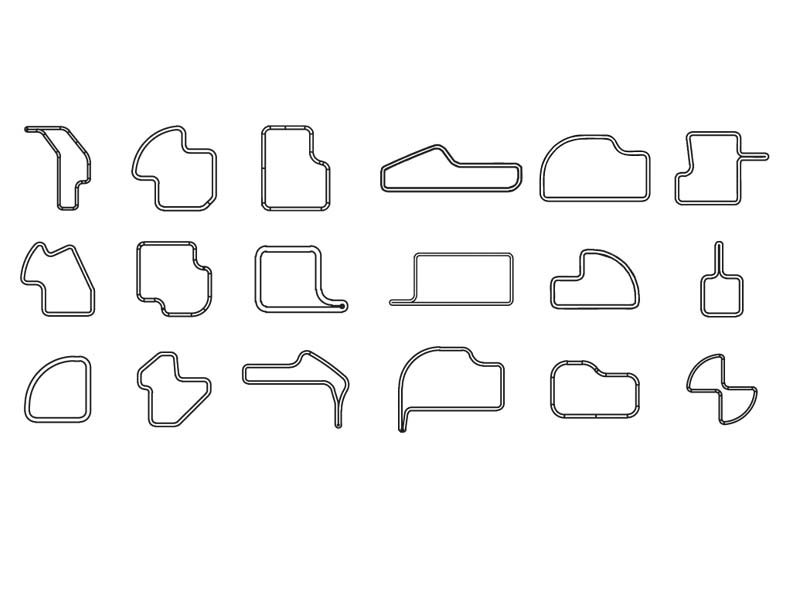
We run servo-controlled lines and cassette-type roll forming machines, supported by all-electric CNC bending, robotic laser cutting and robotic welding. Tooling is designed and built in-house, removing an external dependency from every new programme. Contactless 3D scanning has replaced much of the manual gauging, while production data tracking and structured root-cause analysis close the loop.
The results are measurable rather than rhetorical: an 80% reduction in changeover time, a 25% reduction in rejections and a 25% improvement in throughput. Underneath it sits a certified ISO and IATF quality management system, and ROPS and FOPS compliance on cabin structures.
What strategies has the company adopted to ensure uninterrupted production and timely deliveries in a dynamic business environment?
Continuity is designed, not rescued. Integration carries much of the weight, because slitting through to powder coating happens in one facility and a problem does not travel through three subcontractors before anyone notices it. So does input control: we source prime-grade coil from approved domestic mills with full traceability, keeping material quality and availability inside a relationship we manage rather than a market we hope will behave.
The third is headroom. We deliberately hold installed capacity ahead of current demand, so a surge on one programme does not become a delivery problem on another. In-house tooling works the same way. None of it is glamorous. But manufacturing is not outsourced for efficiency. It is outsourced for certainty, and certainty is built from unremarkable disciplines applied without exception.
How is Mother India Forming using automation and digital systems to improve productivity and operational efficiency?
I would separate automation from the story usually told about it. In precision forming, labour is the least interesting part. The real return is consistency: removing the small human variations in setup and changeover that, multiplied across thousands of parts, decide whether you have a stable process or a steady stream of rework.
Digital systems earn their keep the same way. Monitoring lets you catch a drifting process or a wearing tool while you can still act, not in the post-mortem after a batch has gone wrong. Traceability lets you find a cause instead of a culprit. What I would push back on is treating the technology as the transformation. Plenty of factories are drowning in dashboards nobody reads.
Looking ahead, what are the company’s key priorities for growth, and how do you see the Indian construction equipment manufacturing ecosystem evolving over the next five years?
Our priorities are straightforward. We are adding four roll forming lines during 2026, extending into higher-strength steel forming and deepening digital production monitoring. Commercially, the focus is on moving up the value chain with existing partners, from profiles to sub-assemblies to complete structures, and strengthening the export programmes we already supply.
For the industry, the defining shift of the next five years is the move from a cost-led market to a capability-led one, and it is already underway. Regulation will keep tightening, equipment will keep getting more electrical, and OEMs will keep cutting supplier numbers while asking more of those that remain.
India has a decision to make within that. The easy path is remaining the affordable option, a position the next low-cost region can always take. The harder and far more valuable path is becoming known for engineering-led manufacturing. What separates the two is not machinery. It is whether a company is willing to engineer rather than merely fabricate.
Operator safety structures are among the most demanding components you make. What does ROPS and FOPS compliance actually ask of a component supplier?
More than most people assume. These are not requirements that can be addressed only by testing a finished cabin at the end. They reach back into the geometry, material, joints, mounts and manufacturing controls.
That is why we treat these as engineering work rather than fabrication. Where the design and validation basis allow it, we produce A-pillars, B-pillars and front frames as continuous roll-formed profiles rather than assemblies of multiple welded parts. Reducing structural joints can reduce potential sources of variation in the load path. Where appropriate, holes, end cuts and hinge provisions are integrated into the controlled production process, so the component arrives ready for assembly with the required dimensional accuracy.
The commercial argument follows from the safety one. A structure that performs predictably under load is also more predictable on the assembly line. In this segment, those are closely connected engineering and manufacturing challenges.