

On-Site Crushing Redefines Project Efficiency Powered by Sustainable Productivity

According to Mr. Piero Guizzetti CEO of MB Crusher India Pvt. Ltd. attachments enable contractors to crush, reuse, and recycle materials at the project location, eliminating hauling, transporting, downtime, and external dependency. The result is measurable savings in fuel, labor, and time, while converting waste into valuable construction resources.
How does MB Crusher’s on-site recycling system help reduce overall project costs and timelines?
One of the biggest bottlenecks we see in India’s infrastructure and demolition projects is not the excavation itself, but the movement of material. When waste or excavated rock needs to be transported to a stationary crusher 40–60 km away, the project encounters inefficiencies that can be addressed with MB solutions, as it starts to deplete time, fuel, and labur.
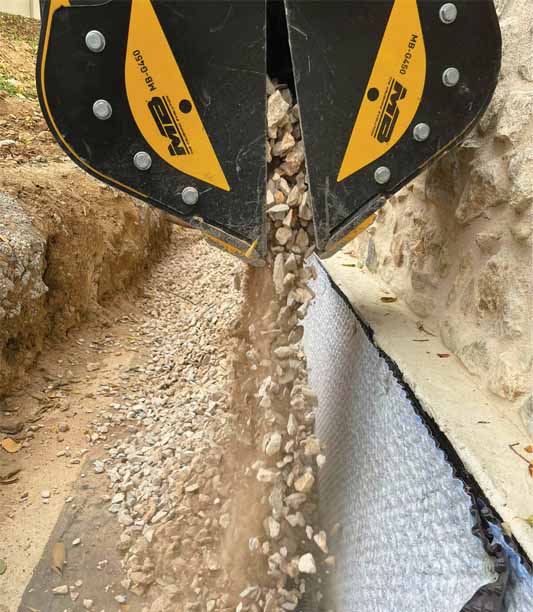
Our system flips that entirely. By attaching a crusher bucket to the excavator, which is by default already present at the site, the contractor crushes material, where it is generated. This removes unnecessary transportation to and from a stationary crusher and or disposal site, eliminates other disposal costs and activities, and converts what was “waste” into usable GSB, WMM, backfill, subbase, or recycled aggregates.
For example, on a PMGSY road project in Maharashtra, the contractor was facing delays because basalt had to be taken 60 km to the nearest crusher. Once they deployed our BF90.3 on a 20-ton excavator, they began producing GSB on-site and reported over 60% reduction in cost and time.

How do MB Crusher attachments perform in India’s diverse working conditions?
India tests equipment in every possible way — extreme dust in quarries, humidity on coastal sites, high-altitude projects in Ladakh, and remote Himalayan terrains with limited to no road access.
Our attachments actually thrive, and their value is exponentially increased by such variability. The hydraulic drive keeps performance consistent even in dust-heavy areas. Moreover, other specific advantages include-
Anti-wear and HARDOX steel ensure resistance to relatively abrasive stones.
Water misting options help reduce dust in urban or sensitive zones.
Compact, self-contained design means no dependency on external power sources and no negative impact on the base machine.
We have machines operating at 16,700 feet in India, where setting up a stationary crusher is nearly impossible. Contractors in those types of regions told us the equipment made the difference between a delayed project and a completed one within the working season.
What advantages do MB Crusher buckets offer compared to hand breakers or stationary crushers?
Hand breakers are slow, inconsistent, and labor-heavy. They break rock, but they do not produce usable aggregate, especially considering the increasing quality controls that are being put in place by various Government implementing agencies. Hence, you still need to further process the material afterwards.
Stationary crushers, on the other hand, require land, civil foundations, electricity connections, environmental clearance, consistently high demand to make them viable, and transportation of material.
With our crusher bucket, crushing operations move directly to the project site, allowing the excavator operator to produce uniform aggregate on the spot without the need for additional machinery, extra workforce, or significant running costs.
One government contractor working on an 80 km road project switched from a breaker to our crusher bucket and immediately saw productivity jump to 28–30 tons per hour, with a sharp drop in fuel and labor costs.
How do MB Crusher attachments support sustainable construction and circular economy initiatives?
Sustainability for us is not a slogan; it is built into the function of the product. When material is crushed and reused on-site, landfill waste drops dramatically, emissions from material transport are reduced, the need to extract new natural aggregates decreases, and rebar from reinforced concrete can be separated and recycled efficiently.
Construction waste becomes a resource, not a liability. This is core to the circular economy: Use what you already have before consuming new resources. Thousands of tons of concrete and stone that would have been sent to waste are now repurposed directly into new foundations, backfill, or road layers.
Are MB Crusher attachments compatible with commonly used excavators in India?
Yes. Outmost compatibility is in our DNA. Our attachments work with all major excavator and backhoe loader brands and models in India, such as CAT, JCB, Tata Hitachi, SANY, Hyundai, Volvo, Komatsu, Kobelco, XCMG and more.
We cover excavators from 6.5 tons to 100 tons, and we also offer dedicated models for backhoe loaders, skid steers, and wheel loaders. No modification is needed. If the excavator has the required hydraulic flow, the attachment is plug-and-play.
What after-sales support and training do you provide?
We have a strong and expanding pan-India service and dealer network, offering both on-site and immediate support when required. This support includes local service partners across multiple states, quick-access spare parts to minimize downtime, technical and operational training for operators and maintenance teams, and direct service assistance from MB engineers for specialized or complex applications.
We don’t just sell equipment. We stay with the customer throughout the project lifecycle.

Can you share an example where MB Crusher improved project efficiency?
Certainly, during a 40 km rural road project in Maharashtra, large volumes of excavated basalt were obstructing progress, and transporting it to the nearest fixed crusher meant long hauls, rising diesel costs, and inevitable delays. Once the contractor deployed our BF90.3 crusher bucket on-site, the “waste rock” was converted into high-quality GSB, which was produced at the point of excavation. As a result, transportation costs were eliminated, Project timelines accelerated, and material expenses dropped significantly. Further, no environmental clearance was required for a fixed crushing plant. ‘This is exactly the kind of transformation we enable every day, turning constraints into productivity