
EXCON 2025 Highlights the Industry’s Move Toward Energy-Efficient Construction Equipment
EXCON 2025 reflected the evolving priorities of the construction equipment industry, with a clear emphasis on efficiency, sustainability, and advanced technologies. Customers are increasingly focused on lifecycle cost, energy efficiency, compact design, and digital compatibility, indicating a shift toward smarter and environmentally responsible solutions for infrastructure and industrial applications.
What innovative trends or client requirements did you observe at EXCON 2025?
At EXCON 2025, the most noticeable trend was the strong shift toward efficiency-driven and future-ready equipment. Customers are no longer asking only for high torque or heavy-duty machines; they are equally focused on energy efficiency, compact designs, and lower operating costs.
We also saw growing interest in electric and hybrid construction equipment, especially for urban projects where noise and emissions are major concerns. Clients are now more aware of lifecycle cost rather than just initial price. They want products that are reliable, easy to maintain, and compatible with automation and digital monitoring systems. This clearly shows that the industry is moving toward smarter and more sustainable solutions.
Which emerging technology or innovation do you see as a game-changer for the construction equipment industry?
In my view, electrification combined with intelligent drive systems is going to be a real game-changer. Battery-powered and hybrid machines are no longer concepts—they are becoming commercially viable. Along with this, the use of variable frequency drives, sensors, and condition monitoring is transforming how equipment operates on-site.
Another major shift is the focus on compact, high-torque power transmission solutions. Machines are getting smaller, but performance expectations are increasing. Technologies that allow better torque delivery with lower energy consumption will define the future of construction equipment.
Please evaluate your post-EXCON experience in terms of your business relevance?
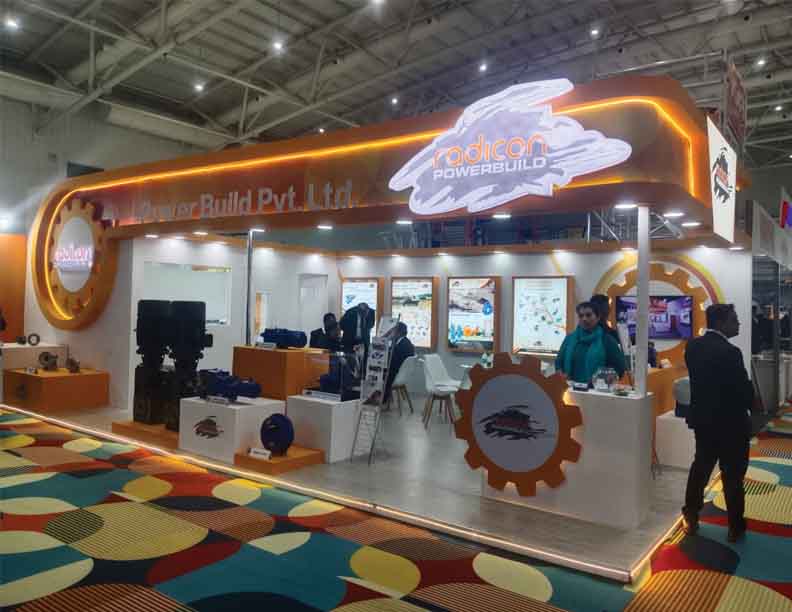
Our post-EXCON experience has been extremely positive. The quality of interactions was very strong, and most discussions were technically driven rather than purely commercial. We received serious enquiries from OEMs, EPC contractors, and end users who were looking for customized power transmission solutions.
EXCON 2025 helped us strengthen existing relationships and also open doors to new collaborations. It confirmed that our product direction aligns well with current market expectations, especially in heavy-duty, energy-efficient, and application-specific drive solutions.
Which of your products, technologies, or solutions introduced at the event commanded the value proposition and why?
Our Series K helical bevel geared motors attracted significant attention, especially from customers in mining, cement, and heavy material handling. The modular design, high torque capacity, and ease of installation clearly stood out.
Along with this, our roloid gear pumps generated strong interest due to their energy-efficient performance and suitability for demanding industrial applications. Many visitors appreciated the fact that these products directly address rising power costs and maintenance challenges. Overall, the value proposition was driven by reliability, efficiency, and long-term operational savings.
How do you assess the current market demand for construction and heavy equipment with respect to the latest development in your segment?
The demand outlook is quite encouraging. Infrastructure projects are picking up pace, and there is steady investment in roads, metro rail, ports, and industrial facilities. This is directly boosting demand for construction and heavy equipment. At the same time, customers are becoming more selective. They are looking for proven, high-quality components rather than experimenting with low-cost alternatives. In our segment, demand is moving toward heavy-duty, customized, and energy-efficient gear solutions that can perform reliably under tough site conditions.
What opportunities do you see for collaboration or innovative technologies aligned with your upcoming projects?
Answer: There are strong opportunities to collaborate with OEMs working on electric and hybrid construction machines. Many of them are looking for compact and efficient power transmission partners who can co-develop solutions from the design stage itself.
We also see scope for collaboration in digital monitoring and predictive maintenance, where gearboxes and motors can be integrated with sensors and control systems. Such partnerships will help customers reduce downtime and improve equipment life, which is becoming a key requirement across the industry.
What strategies would you recommend to address industry challenges such as productivity, sustainability, and digitalization?
Answer: To improve productivity, the industry must focus on reliable equipment that minimizes breakdowns and maintenance time. Standardization combined with modular design can significantly improve uptime.
For sustainability, energy-efficient motors, optimized gear designs, and support for electric equipment are essential. Even small improvements in efficiency can result in large energy savings over time. Digitalization should be approached in a practical way. Instead of overcomplicating systems, companies should adopt simple monitoring tools that provide useful data on load, temperature, and performance. This helps customers take timely action and avoid unexpected failures.
What infrastructure requirements are necessary to gain major market share for your product?
Answer: To gain a strong market presence, a robust manufacturing base and reliable supply chain are critical. Customers expect consistent quality and timely delivery, especially for large infrastructure projects.
Equally important is a strong service and support network. Availability of spares, quick technical assistance, and application support play a major role in customer confidence. Investment in testing facilities, R&D infrastructure, and skilled manpower also helps in delivering application-specific solutions that set us apart in the market.
How do you see the Indian construction equipment market shaping up in 2026–27?
I remain very positive about the Indian construction equipment market in 2026–27. With strong government focus on infrastructure development—such as highways, metros, ports, mining, and industrial projects—the demand for heavy-duty construction equipment will continue to grow. This growth will directly increase the need for reliable and high-performance power transmission solutions like geared motors, gearboxes, and pumps that can operate continuously in tough site conditions. Customers will increasingly prefer products that offer higher torque capacity, better efficiency, longer service life, and lower maintenance requirements. Indian manufacturers will also become more competitive by focusing on robust design, application-specific engineering, and consistent quality. Companies that invest in strong manufacturing, R&D, and customer support will see sustained growth, as end users look for dependable partners who can support large and long-term infrastructure projects.