


Building Durability into India’s Infrastructure Growth
India’s infrastructure expansion is reshaping expectations around durability, sustainability and construction quality. In this interview, Assess Build Chem Pvt. Ltd. discusses the evolving role of advanced construction chemicals, waterproofing, restoration, technical training and emerging technologies in delivering resilient, high-performance structures built to meet future demands.
How is the growing infrastructure sector influencing the demand for advanced construction chemicals in India?
India’s infrastructure ambition is unprecedented in scale and speed — and construction chemicals are materials that make that ambition structurally viable and extremely sustainable. When we build metros, tunnels, expressways, airports, and urban flyovers simultaneously, we are not simply building more; we are building in conditions of more complexity, faster timelines, and higher accountability for long-term performance. That combination is exactly where advanced construction chemicals — admixtures, waterproofing systems, repair and rehabilitation products, and protective coatings — shift from being optional additions to being engineering necessities.
What we are witnessing is a shift in quality, not just volume. Government agencies and private developers who have had to spend significantly on repair and remediation of structures built less than a decade ago are asking harder questions at the specification stage. They want products that are code-compliant, independently tested, and backed by technical support. This has been good for manufacturers like Assess Build Chem who have invested in building genuinely technical product portfolios rather than competing purely on price. The infrastructure growth story is real, and it is creating a market that is finally beginning to reward quality.
What challenges do affect the durability of modern buildings and infrastructure projects?
Durability failures in modern construction almost never have a single cause. They are systemic — a combination of design assumptions that do not account for actual environmental exposure, mix designs optimised for workability instead of impermeability, inadequate curing in the field, and waterproofing systems that are either over-estimated, under-specified or applied incorrectly. When you combine these factors with the aggressive environmental conditions that much of India presents — coastal chloride exposure, carbonation in high-pollution urban environments, thermal cycling in northern climates, and extreme monsoon hydrostatic pressure — the result is premature deterioration that is both structurally concerning and economically wasteful.
The challenge I find most frustrating, because it is the most preventable, is the treatment of waterproofing as an afterthought. In the hierarchy of building components, investing in waterproofing is consistently marginalised despite the fact that water ingress is the primary accelerator of virtually every other form of structural deterioration — corrosion, carbonation, freeze-thaw damage, efflorescence, and microbial growth. We have seen structures requiring major repair in eight years of completion that could have achieved fifty-year service lives with properly designed and integrated waterproofing systems at the construction stage. The cost differential is not even significant — the problem is largely one of awareness and specification discipline.
In addition, we are seeing accelerated construction timelines, leading to a lack of detailing and proper finishing during construction. Improper slopes and drainage, incorrectly provided expansion and construction joints, improper tie-in of waterproofing systems to existing structures. These shortcomings are often deemed to be solved by waterproofing, which is an unrealistic expectation from the waterproofing system.
How are sustainable construction materials changing industry practices today?
Sustainability in construction chemicals is being driven by two distinct forces. The first is regulatory and market pressure towards lower-VOC, waterborne, and low-embodied-carbon products. The second is the recognition that the most sustainable structure is one that lasts — that does not need to be demolished and rebuilt within thirty years because its durability was compromised at the material selection stage.
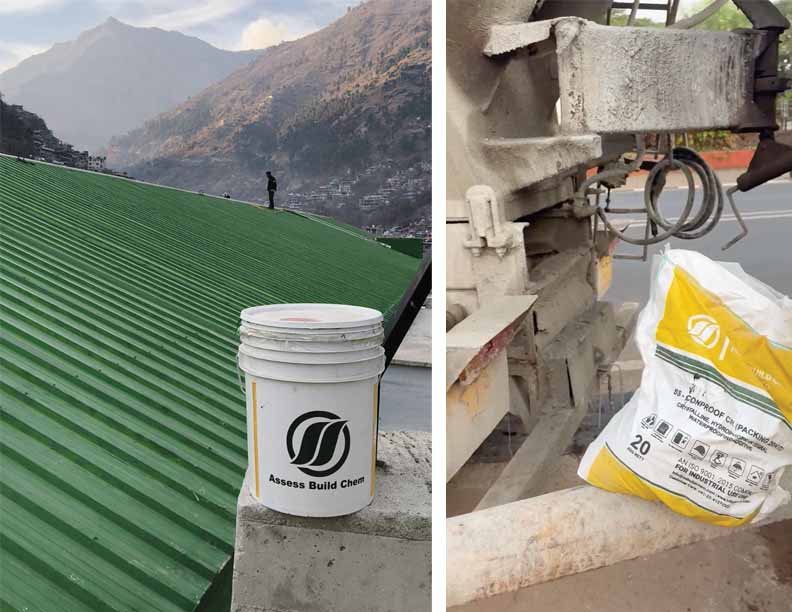
At Assess Build Chem, our position is that these are not in conflict. Waterborne elastomeric coatings have advanced to the point where their performance profile is comparable to, and in some respects superior to, traditional solvent-borne systems. Our integral waterproofing admixtures, SS – ConProof CR for example is a crystalline system that supports concrete mix designs that use supplementary cementitious materials — fly ash, GGBS, silica fume — which helps reduce cement content and therefore embodied carbon without sacrificing strength or impermeability. Products like our SS – CrystoSeal 2K are designed to extend the maintenance-free service life of waterproofed elements, which itself reduces the resource consumption associated with periodic repair cycles.
What I would caution against is greenwashing — the adoption of sustainable positioning without substantive change to product chemistry or performance. Buyers are becoming more discerning, and the conversation is increasingly about documented lifecycle performance rather than marketing claims.
Can speed of construction and long-term structural performance go hand in hand?
They can, but it requires meticulous planning and the right material choices — it does not happen automatically. The instinct on fast-track projects is to save time wherever possible, and unfortunately concrete curing, waterproofing installation, and protective coating application are frequently where time is “saved.” The consequences typically show up three to five years later and cost multiples of what the original time saving was worth.
The construction chemicals industry has responded to this reality with products specifically engineered for accelerated construction schedules. Fast-setting repair mortars — our SS – StructoCrete RS and SS – StructoRep FL are examples — allow structural repair work to achieve structural load capacity within hours rather than days. Early-strength admixtures allow formwork to be struck sooner without compromising 28-day compressive strength. Fast-cure waterproofing membranes allow floor-on-floor construction to proceed without waiting for extended curing periods. These products exist precisely because the market has demanded that speed and performance be reconciled. We also a special Hydrophobic Lining System SS – HydroNil PM that combines the efficiency of a waterproof coating and plaster in one – saving valuable time for water retaining structures.
The caveat is that fast-track construction still demands proper sequencing. You cannot compress the time needed for substrate preparation, and you cannot apply a membrane to a substrate that has not been properly primed or has excessive moisture. Site supervision and quality assurance are more important on fast-track projects, not less — and this is an area where the industry has more work to do.
What are the key considerations when restoring heritage and aging structures?
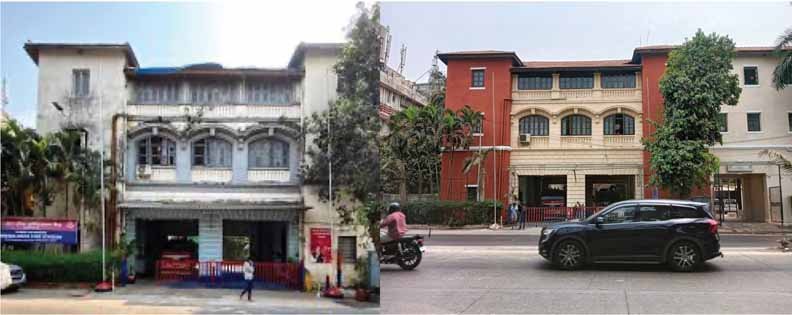
Heritage restoration is probably the most technically demanding work in our industry, and it is also the work I find most meaningful, because mistakes are irreversible. When you are working on a centuries old temple, a colonial-era masonry building, or a pre-independence public structure, you are dealing with substrates and original materials that may be over a century old, and the primary obligation is to do no further harm.
The first and non-negotiable principle is substrate compatibility. Original lime-based mortars and masonry are softer, more flexible, and more breathable than modern cement-based systems. Applying rigid, high-modulus repair mortars to these substrates creates differential movement stresses that cause the original structural unit to fail — the repair accelerates the very deterioration it was intended to arrest. This is why our SS – HistoRep / HistoFill CFW range is specifically formulated around hydraulic lime chemistry with carefully matched mechanical properties — the goal is to make the repair material weaker, not stronger, than the original.
The second principle is reversibility. Conservation ethics — codified in charters like the Venice Charter — require that interventions be reversible where possible, so that future restorers with better knowledge and better materials can address what we cannot. The third is documentation: a thorough condition survey, material analysis of the original substrate, and a detailed record of all interventions must accompany every heritage project. These are not bureaucratic requirements; they are what distinguishes conservation engineering from ordinary repair work.
How can waterproofing and repair solutions help extend the life of buildings?
Water is a component of concrete, a participant in its deterioration as well a carrier of materials damaging the very fabric of concrete. Waterproofing does not protect structures from water alone — it protects them from every deterioration mechanism that water initiates or accelerates. Chloride-induced rebar corrosion, carbonation front progression, alkali-silica reaction, freeze-thaw damage, and biological growth all require moisture as a carrier or catalyst. A correctly specified and correctly applied waterproofing system is therefore the single highest-value intervention available for extending structural service life, with returns that far exceed any other maintenance investment.
The key word is “system.” Waterproofing fails not when the membrane fails, but when the system fails — when terminations are not properly detailed, when expansion joints are not accommodated, when drainage is inadequate, or when a repair is made to the membrane without addressing the root cause of the original failure. At Assess Build Chem, our technical support approach is system-based — we do not sell a single product for a waterproofing application; we specify a 5-Step method to ensure the system performs.
For existing structures, repair solutions act as a force multiplier for waterproofing. Crystalline waterproofing admixtures such as SS – ConProof CR create a self-sealing matrix within the concrete that responds to future crack development. We work on cracks and joints with a range of injection grouting systems and high performance tapes. Final barrier coatings and protection system round out our waterproofing range. Together, these products give building owners a credible path to extending service life by years, which is a far better outcome economically and environmentally than demolition and reconstruction.
How important is technical training in improving construction quality and safety?
Technical training is the missing link in Indian construction quality. We have access to excellent materials. We have Indian as well as international guidelines and codes that, when properly followed, produce durable structures. We have manufacturers who can provide detailed method statements and application guidance. What we frequently lack is the trained, certified personnel on site who reads that method statement, understands it, and executes it with discipline.
This is why Assess Build Chem’s relationship with the Institute for International Talent Development is so important to me personally. Through IITD, we run certification programs for waterproofing professionals — from site applicators to structural engineers — and the intent is to create a cadre of trained practitioners who can bridge the gap between specification and execution. The program is designed specifically to raise the technical baseline of professionals who make waterproofing decisions, whether they are specifying a system or supervising its application on site.
Safety is inextricably linked to this. Poorly applied waterproofing, incorrectly mixed repair mortars, and incompatible coating systems create not just durability failures but safety hazards — structural voids, delamination under foot traffic, and material failures in trafficked areas. Training is the most cost-effective safety intervention available, and it is the one that the industry consistently underinvests in.
Which emerging technologies are set to transform the construction chemicals industry?
Several developments are genuinely exciting, and I am cautious about overstating any of them because construction is a conservative industry where adoption cycles are long and the validation threshold for new materials rightly demands demonstrated field performance.
That said, crystalline technology is maturing rapidly. What was once a proprietary mechanism confined to a handful of global brands is now better understood chemically, and formulation capability in this space has improved significantly. The ability of crystalline active systems to respond to future cracking and re-seal autonomously is a demonstrated mechanism, and the next frontier is engineering its consistency and quantifying its service-life contribution more precisely.
Silane-terminated polymer chemistry — represents a genuine step forward for structural waterproofing applications where flexibility, adhesion to damp substrates, and UV stability are simultaneously required. We are actively working on this at Assess Build Chem because we believe it addresses a real gap in the Indian market.
Modern cementitious linings for waterproofing and protection will also see an expanding market and applications.
At a broader level, structural health monitoring using embedded sensors and the application of AI to analyse deterioration patterns will change how asset owners manage their maintenance cycles. The shift from reactive to predictive maintenance — knowing when and where intervention is needed before visible failure appears — will increase the value placed on products that can be precisely specified and monitored for performance, and will benefit technically credible manufacturers.
What trends will shape the future of India’s construction and infrastructure sector over the next five years?
Five trends stand out to me as genuinely consequential rather than cyclical.
First, durability-by-design will become a procurement requirement rather than a voluntary aspiration. As project delivery models shift towards EPC and long-term O&M contracts, clients will demand that durability be specified, documented, and guaranteed. This will accelerate the adoption of performance-based specifications that reference measurable parameters such as permeability, chloride diffusion coefficients, and carbonation resistance, which is the direction that IS codes and IRC guidelines are already moving.
Second, the formalisation and certification of the applicator supply chain will gain traction. Quality failures at the application stage are the industry’s Achilles heel, and the market is beginning to recognise that the best product poorly applied is worse than a good product correctly applied. Contractor certification and applicator training programs will become a differentiating requirement in serious tender specifications.
Third, the retrofit and rehabilitation market will grow faster than new construction in relative terms, as India’s post-independence infrastructure — built in the 1950s through 1980s — reaches the end of its original design life and requires engineered intervention rather than cosmetic repair.
Fourth, sustainability reporting requirements will move from voluntary to mandatory for large infrastructure projects, creating demand for products with documented environmental product declarations and verified low-embodied-carbon claims. And fifth, the development of a formal structural waterproofing ecosystem — independent consultants, certified contractors, audit protocols, and insurance-backed performance warranties — is only a matter of time. This exists in developed markets and its arrival in India will be transformative for the quality of waterproofing outcomes and for manufacturers who have invested in building the technical credibility to operate in that ecosystem.